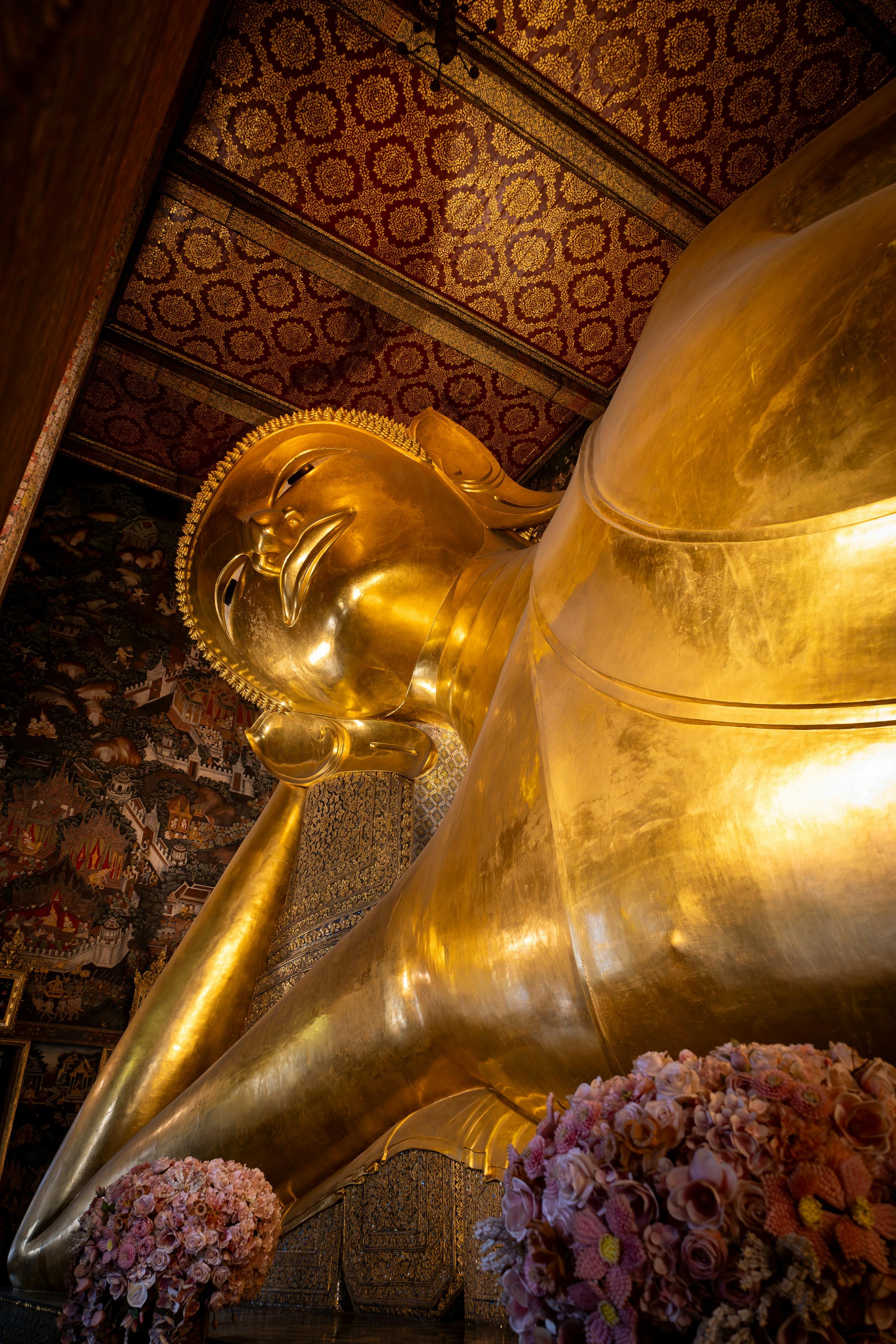
There is no roof. There are no pillars. Beneath the open sky alone, a body stretching some 28 meters in length lies at rest. The great reclining Buddha of Wat…
Multilingual AI audio guide exhibit on WOUDiO (PWA). WOUDiO pioneered the world’s first audio guide platform with built-in donation: listeners can support the cultural venue without leaving the listening experience. The text below is the localized description, details, and narration script for this audio guide stop.
There is no roof. There are no pillars. Beneath the open sky alone, a body stretching
some 28 meters in length lies at rest. The great reclining Buddha of
Wat Lokayasutharam was built of brick and plaster; its head rests upon one bent arm, and beneath half-closed eyelids, it sleeps an eternal sleep. A pilgrim standing at those feet may first notice a simple fact — that the whole of their own height is no greater than the length of one of the Buddha's toes.
Once, this Buddha dwelled within a hall. Wooden beams held the roof aloft, walls enclosed it on all sides, and in the half-darkness, incense smoke rose in quiet spirals. But in
1767, when the capital was consumed by fire, the roof and pillars burned and fell, and only the Buddha remained. The image that had lost everything meant to shelter it now lies with the sky itself as its canopy. On rainy days, the rain falls upon it; in the dry season, the relentless sun bears down; and across the surface of that plaster, more than two hundred and fifty years of wind and weather have left their mark.
Parinirvana is the final image of the Buddha at the moment of his passing — the absolute stillness of one wholly released from the cycle of suffering. Yet what this image seems to speak of is perhaps less doctrine than the boundary between what was destroyed and what remained. The glorious city of waters was reduced to ash; golden Buddhas were melted down; countless heads were struck from countless shoulders. And still this great body went on lying here. As though refusing even to be broken — quietly, simply.
Across the white plaster body, a single length of saffron cloth is draped. Still, people come here — to offer flowers, to press their palms together in prayer. Amidst the record of ruin, devotion alone never ceased.
The story of the city of waters begins in rising flames, passes through the headless Buddhas, and arrives here — at this vast stillness, which lost its roof and yet goes on sleeping. What the flames could not take away lies still beneath the open sky.
Site name: Wat Lokayasutharam
Main feature: Open-air reclining Buddha (approx. 28 meters in length; brick and plaster construction)
Posture: Reclining parinirvana pose, head resting on the right arm
Current condition: Exposed to the elements after the loss of its enclosing hall; draped in saffron cloth
Historical turning point: The hall was destroyed when Ayutthaya fell in 1767
Location:
Ayutthaya Historical Park, Thailand
Exhibition theme: The glory and ashes of the city of waters
Official Site:
Tourism Authority of Thailand
Photo: Martijn Vonk /
Unsplash (unsplash)