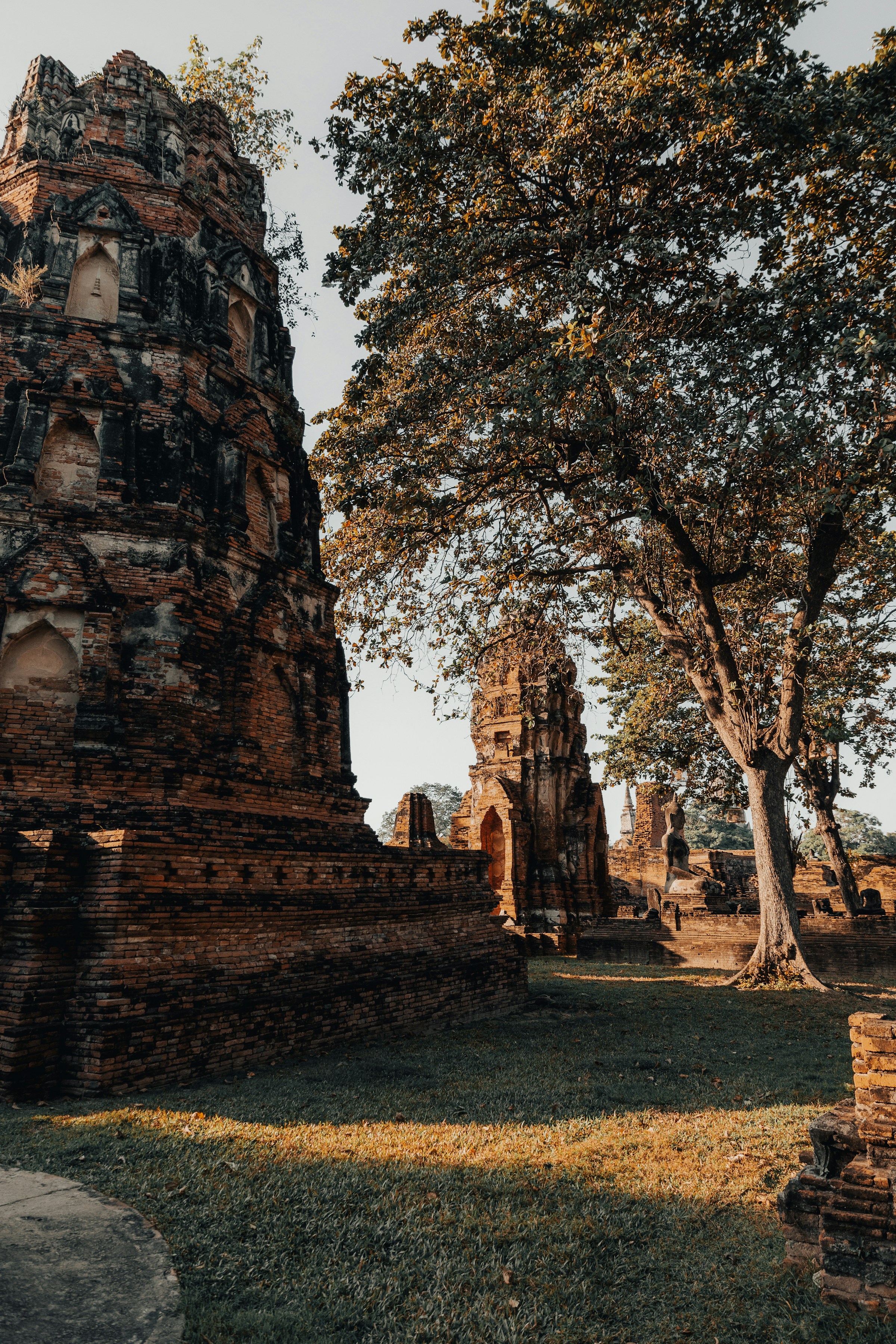
A wind carrying the scent of the tide moves upriver. Where the
Chao Phraya River meets two other rivers, encircling this land like a ring of water, the sound of oars and the noise of human voices never ceased from morning to night — more than four hundred years ago.
Ayutthaya — an island, and yet a city that swallowed the whole world within itself.
At the landing docks, flat-bottomed boats laden with rice lay moored in rows. The shouts of porters shouldering their loads, merchants crying out over prices, the smells of fragrant wood and fish sauce and ripened fruit all mingling together. If you listened carefully, you would find that no single language was enough here. Hokkien Chinese, Persian, Portuguese, Japanese, and the tongue of Siam — all of them swirled together above the surface of the river.
Consider what gathered here — from China came silk and porcelain, from India dyed and woven cloth, from Arabia horses, from Japan silver and swords. And from this island, deerskin, sappanwood dye, ivory, and fragrant timber were carried out to the ports of the world. That a Japanese man named
[Yamada Nagamasa](https://woud.io/ayutthaya/ja/ayutthaya_10) led hundreds of his countrymen in this city and served its king — that, too, happened in the very heart of this clamor.
Across the river, the settlements of each nation's people lined the banks like a row of small countries. The Japanese quarter, the Portuguese quarter, the Dutch trading post, the Chinese district. People of different complexions, people who prayed to their gods in different ways, sharing the same river water and calling out their prices in the same market. A city that belonged to no one, and to everyone — those words suit this place well.
Now, that great noise has grown still. Yet in the evening when the wind dies and only the sound of the river remains, there is a sense that the sails and oars that once crowded this water are still moving somewhere, just out of sight.
The world met here, once — and this island, holding that memory sunken in the depths of its waters, flows on quietly still.
Subject:
Ayutthaya as an international trading city — Kingdom of Ayutthaya (founded 1350 –
fell 1767)
Geography:
Island formed by the confluence of the Chao Phraya, Lopburi, and Pa Sak Rivers
Trade Goods: Deerskin, sappanwood, ivory, fragrant timber, rice (exports) / silk, porcelain, silver, swords (imports)
Foreign Quarters: Japanese quarter, Portuguese quarter, Dutch trading post, Chinese district
Key Figure: Yamada Nagamasa (leader of the Japanese quarter)
Location:
Ayutthaya Historical Park
Official Site:
Ayutthaya Historical Park — Fine Arts Department, Thailand
Photo: Rowan Heuvel /
Unsplash (unsplash)