Among the Western-style residences scattered throughout Yamate, Yokohama, Berrick Hall stands out as a particularly unique and striking presence. Designed with…
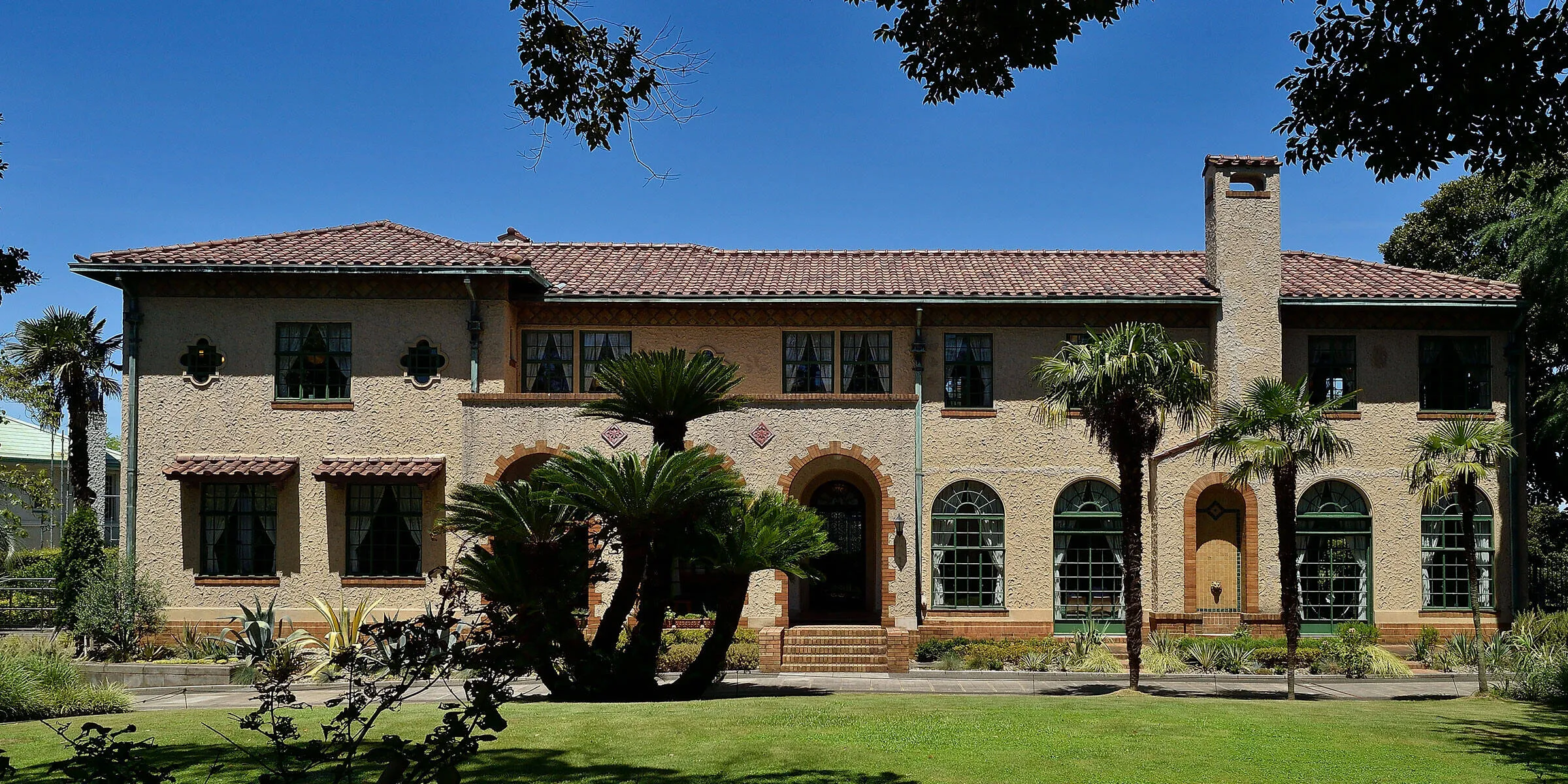
Among the Western-style residences scattered throughout Yamate, Yokohama, Berrick Hall stands out as a particularly unique and striking presence. Designed with passion by architect J.H. Morgan in 1930 for the British trader B.R. Berrick, this mansion embodies the true essence of the Spanish style. Its exterior, with white stucco walls, a red tile roof, and intricate geometric decorations, appears as if it has carried the Mediterranean breeze to Yokohama. Step inside, and you'll find an astonishingly spacious area unfolding before you. The high-ceilinged entrance hall, the elegantly curving staircase, and the living room centered around a fireplace—all evoke the glamorous days of social gatherings that once unfolded within these walls. Morgan imbued this building with a significance beyond that of a mere residence. It served as a spiritual haven for foreigners living in a foreign land, and also as a cultural bridge symbolizing Japan's modernization. This mansion, which miraculously survived the ravages of war, still quietly speaks to its visitors about the universality of beauty that transcends borders. In a space woven by light and shadow, experience the architect's timeless dream.
Among the Western-style residences scattered throughout Yamate, Yokohama, Berrick Hall stands out as a particularly unique and striking presence. Designed with passion by architect J.H. Morgan in 1930 for the British trader B.R. Berrick, this mansion embodies the true essence of the Spanish style. Its exterior, with white stucco walls, a red tile roof, and intricate geometric decorations, appears as if it has carried the Mediterranean breeze to Yokohama. Step inside, and you'll find an astonishingly spacious area unfolding before you. The high-ceilinged entrance hall, the elegantly curving staircase, and the living room centered around a fireplace—all evoke the glamorous days of social gatherings that once unfolded within these walls. Morgan imbued this building with a significance beyond that of a mere residence. It served as a spiritual haven for foreigners living in a foreign land, and also as a cultural bridge symbolizing Japan's modernization. This mansion, which miraculously survived the ravages of war, still quietly speaks to its visitors about the universality of beauty that transcends borders. In a space woven by light and shadow, experience the architect's timeless dream.