Adorned with resplendent decorations, this is the Yokohama Guan Di Temple. Enshrined within is Guan Yu — revered under the divine name Guan Sheng Dijun — a god…
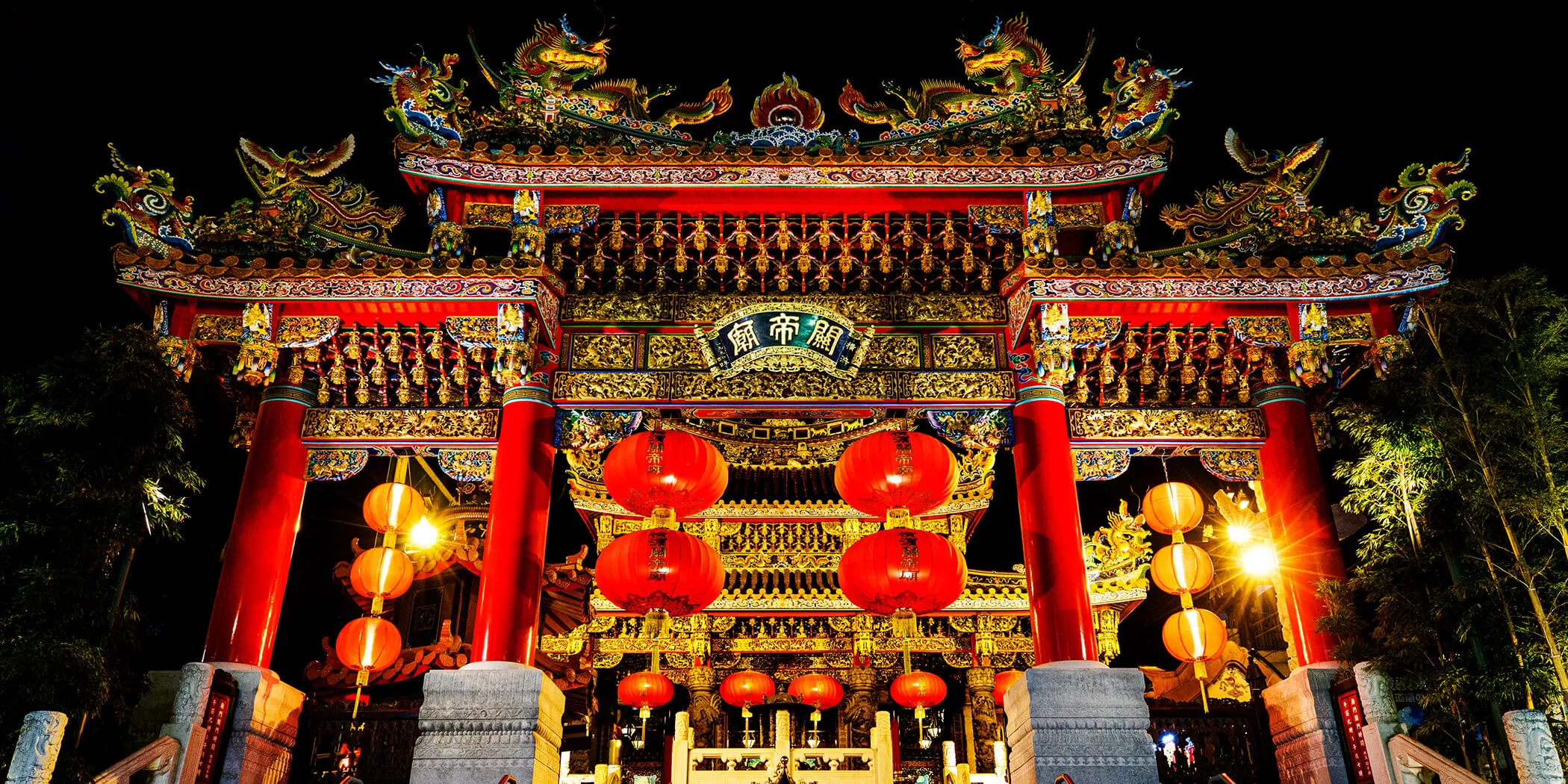
Adorned with resplendent decorations, this is the Yokohama Guan Di Temple. Enshrined within is Guan Yu — revered under the divine name Guan Sheng Dijun — a god of commerce and righteousness, celebrated as one of the great heroes of the Three Kingdoms. You may wonder: how did a warrior come to be worshipped as a patron of merchants? In life, Guan Yu held loyalty and faithfulness above all else. It was precisely this integrity — his unwavering commitment to his word — that merchants came to regard as the highest of virtues. In time, he was venerated both as a god of wealth and as a guardian deity who shields the people from misfortune.
The temple standing before you today was rebuilt in 1990. The original Guan Di Temple was founded in 1873, but it was lost to flames not once, but twice — first in the Great Kanto Earthquake, and again during the Second World War. Yet the people never gave up. For its third reconstruction, donations gathered from overseas Chinese communities around the world.
Step inside, and you are enveloped in a solemn atmosphere — incense smoke drifting through the air, the weight of devotion pressing gently upon you. Before the golden figure of Guan Yu, many visitors stand with hands pressed together in prayer. What they seek is not only prosperity in business. They pray for the health of their families, for success in examinations, for guidance at the crossroads of life. Even now, Guan Yu continues to stand beside people across borders and generations, a presence that transcends time.
In the stillness, the sound of a bell resonates through the air — and perhaps, it has something to say to you as well.
Adorned with resplendent decorations, this is the Yokohama Guan Di Temple. Enshrined within is Guan Yu — revered under the divine name Guan Sheng Dijun — a god of commerce and righteousness, celebrated as one of the great heroes of the Three Kingdoms. You may wonder: how did a warrior come to be worshipped as a patron of merchants? In life, Guan Yu held loyalty and faithfulness above all else. It was precisely this integrity — his unwavering commitment to his word — that merchants came to regard as the highest of virtues. In time, he was venerated both as a god of wealth and as a guardian deity who shields the people from misfortune.
The temple standing before you today was rebuilt in 1990. The original Guan Di Temple was founded in 1873, but it was lost to flames not once, but twice — first in the Great Kanto Earthquake, and again during the Second World War. Yet the people never gave up. For its third reconstruction, donations gathered from overseas Chinese communities around the world.
Step inside, and you are enveloped in a solemn atmosphere — incense smoke drifting through the air, the weight of devotion pressing gently upon you. Before the golden figure of Guan Yu, many visitors stand with hands pressed together in prayer. What they seek is not only prosperity in business. They pray for the health of their families, for success in examinations, for guidance at the crossroads of life. Even now, Guan Yu continues to stand beside people across borders and generations, a presence that transcends time.
In the stillness, the sound of a bell resonates through the air — and perhaps, it has something to say to you as well.